
As electronics manufacturing continues to evolve, managing electrostatic discharge (ESD) goes beyond basic prevention. The focus now lies in selecting the right materials and applying them effectively across production environments. Anti-static and conductive rubber solutions play a critical role in ensuring safe handling, consistent performance, and long-term reliability of sensitive electronic components.
Types of Anti-Static and Conductive Rubber Materials Used in Electronics Manufacturing, Conveyor Belts and Others.
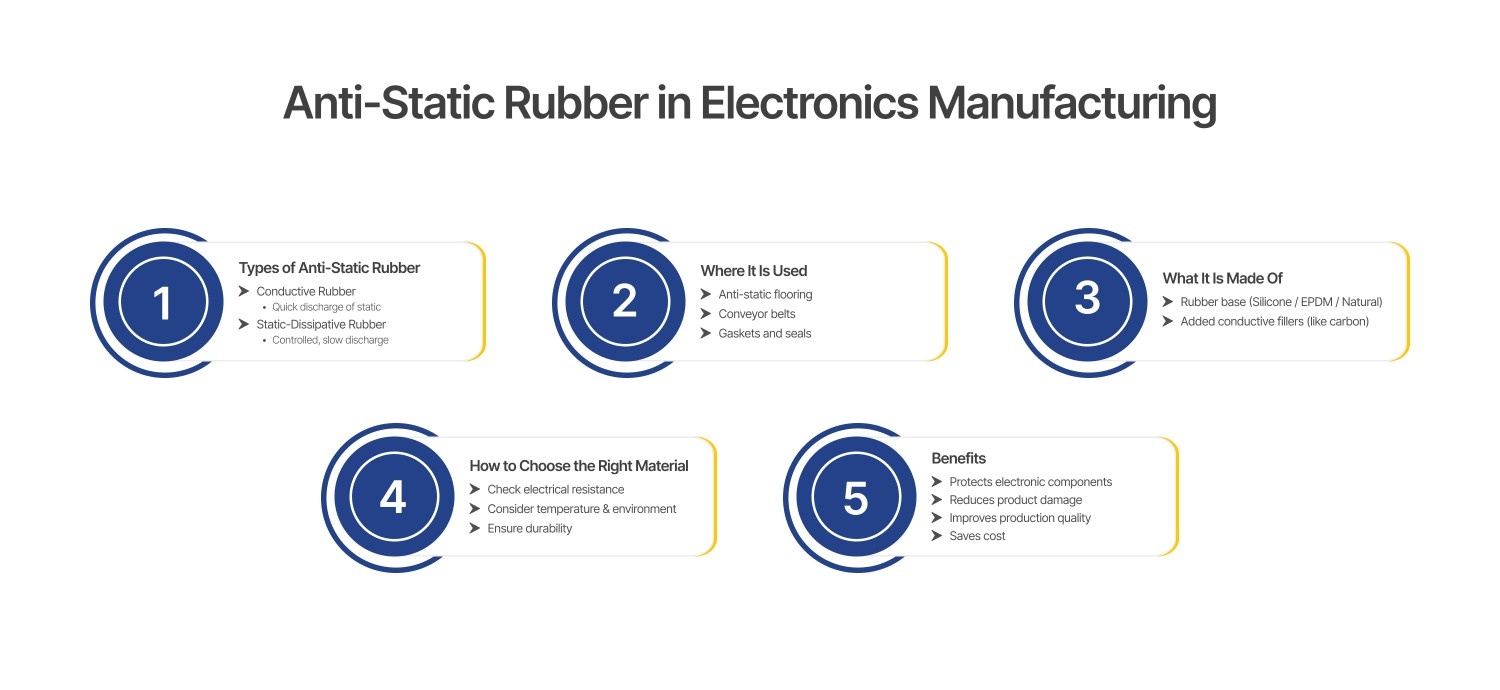
Anti-static and conductive rubber materials are primarily categorized based on how they control electrical charge. The two most used types are conductive rubber and static-dissipative rubber.
Conductive rubber is engineered with very low electrical resistance, allowing static charges to pass quickly and safely to reach the ground. This makes it suitable for applications where immediate discharge is required to prevent accumulation.
Static-dissipative rubber, on the other hand, provides controlled resistance. Instead of rapid discharge, it allows static electricity to dissipate gradually. This controlled behavior makes it ideal for environments where delicate electronic components are handled, reducing the risk of sudden electrostatic damage.
Key Applications of Anti-Static Rubber in Electronics Manufacturing
Anti-Static Flooring Systems
Anti-static rubber flooring is widely used in manufacturing facilities to minimize static buildup caused by human movement. These flooring systems help maintain a stable electrostatic environment, ensuring safer handling of electronic components across production areas.
Conveyor Belts in Production Lines
In automated manufacturing setups, conveyor belts are essential for moving components between processes. When anti-static rubber is used, it helps manage charge generation during movement, reducing the risk of electrostatic interference and improving overall product consistency.
Gaskets, Seals, and Enclosures
Anti-static rubber components such as gaskets and seals are used to protect sensitive equipment from both environmental exposure and static-related issues. These materials help maintain controlled internal conditions, which is crucial for high-precision electronic assemblies.
Material Composition and Performance Factors
The performance of anti-static rubber depends on its formulation. Conductive fillers such as carbon-based materials are commonly added to create pathways for charge dissipation. Additives like Loxiol 3380 help in achieving an appreciable reduction of surface resistance and increased surface conductivity.
The base polymer also influences performance. EPDM is suitable for applications involving exposure to moisture and chemicals. Selecting the right combination of materials ensures durability and consistent electrostatic performance.
Key Considerations for Anti-Static Rubber and conductive Material Selection
Selecting the right anti-static rubber involves evaluating multiple factors. Electrical resistance is a primary consideration, as it determines how effectively static charges are controlled. Materials must meet specific resistance ranges to function efficiently in ESD-sensitive environments.
Environmental conditions such as temperature, humidity, and chemical exposure should also be considered. Choosing materials that can withstand these factors ensures long-term reliability. Additionally, durability and wear resistance are important for applications involving continuous use.
Importance of Reliable Material Sourcing
Consistency in material quality is essential for effective ESD protection. Variations in rubber composition can lead to inconsistent performance, increasing the risk of component damage.
Working with experienced suppliers such as I R Tubes Pvt Ltd ensures access to high-quality anti-static rubber compounds tailored to industrial requirements. Reliable sourcing supports better performance, compliance, and operational stability.
Operational Benefits of Anti-Static Rubber Solutions
Anti-static rubber solutions contribute not only to protection but also to improved efficiency. By reducing static-related defects and minimizing production interruptions, manufacturers can achieve smoother workflows and better product quality.
This leads to reduced costs associated with damage, rework, and downtime. In competitive manufacturing environments, such efficiency gains are essential for maintaining productivity and meeting quality standards.
Conclusion: Selecting the Right Anti-Static Rubber for Better Performance
Choosing the right anti-static rubber material is a critical step in building a reliable electronics manufacturing process. With the right balance of electrical properties, durability, and environmental resistance, these materials help create safer and more efficient production environments.
By focusing on proper material selection and application, manufacturers can strengthen their ESD protection strategies and ensure consistent product performance.
FAQ
Q1. What are anti-static rubber applications?
Anti-static rubber is used in flooring, conveyor belts, gaskets, and rollers, work surfaces to control electrostatic discharge in electronics manufacturing.
Q2. How do you choose anti-static rubber materials?
Selection depends on electrical resistance, environmental conditions, durability, and application requirements.